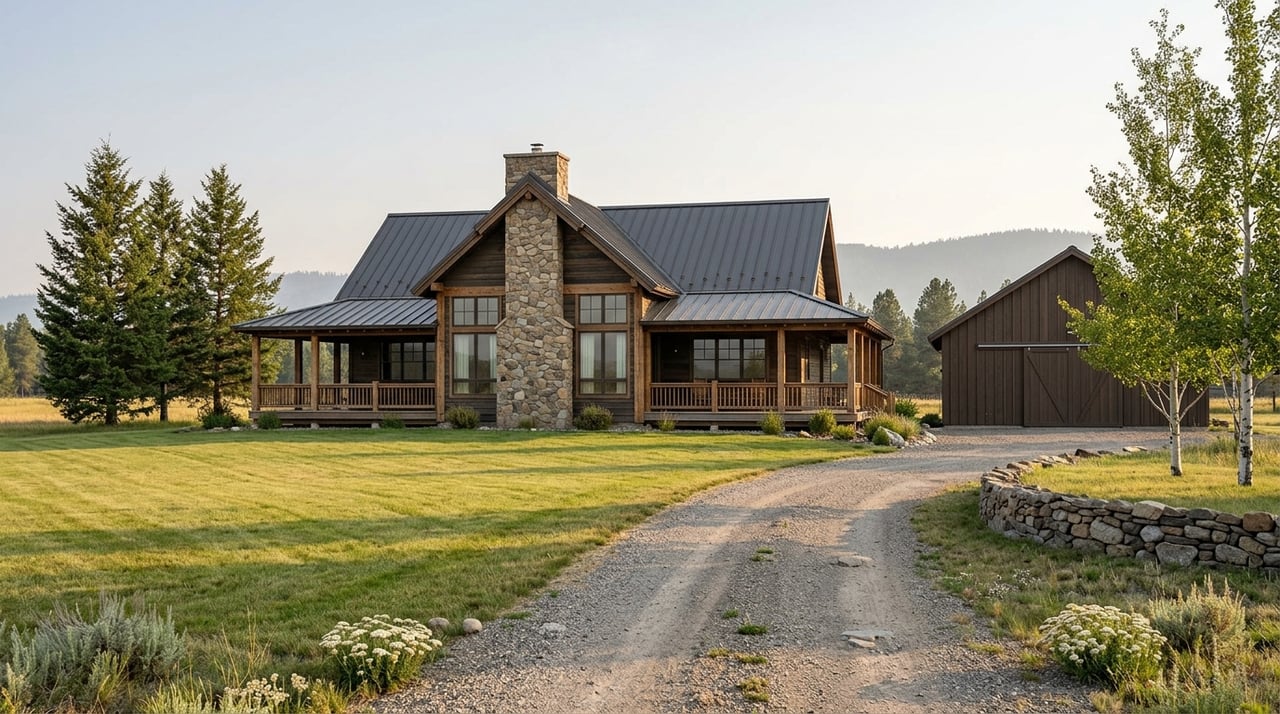
If you’re drawn to the idea of quiet roads, mountain views, and a slower pace, Pony and Harrison may be exactly the kind of places you’ve been looking for. These are not communities built around busy shopping districts or dense neighborhoods. They offer a more rural, outdoors-first lifestyle that appeals to people who want space, scenery, and a strong sense of place. Let’s take a closer look at what it’s like to live in Pony and Harrison.
A Small-Town Lifestyle in Madison County
Pony and Harrison are both very small communities in southwest Madison County. The 2020 Census counted 127 residents in Pony and 105 in Harrison, which gives you a good sense of their scale.
In practical terms, that means life here feels quiet and personal. You are choosing a setting where open space, simple routines, and a rural pace shape daily life more than crowds, traffic, or built-in urban convenience.
Madison County classifies both Pony and Harrison as distance communities that rely on county support for many services. That matters if you are considering a move, because it helps set realistic expectations about infrastructure, travel, and how day-to-day living works in smaller rural places.
Pony Has a Historic Feel
Pony has the character of a preserved mining town. Visit Montana describes it as a once-prosperous gold-mining community where historic buildings from its boom era still remain.
That history gives Pony a distinct identity. Instead of feeling like a newer rural subdivision, it reads more like a compact historic community with roots you can still see in the built environment.
The Montana Department of Transportation map also shows a compact town grid centered on Main Street, with short cross streets and State Route 283 running through town. For you as a buyer, that suggests a more traditional in-town layout rather than a spread-out pattern of newer development.
Harrison Feels More Ranch-Oriented
Harrison offers a slightly different setting. Visit Montana describes it as a ranch town with a compact cluster of houses at the foot of the Tobacco Root Mountains, with local history tied to the Henry C. Harrison family.
The overall feel is rural and grounded, with a landscape that supports a classic Southwest Montana lifestyle. If Pony leans historic in character, Harrison leans more toward a ranch-settlement identity with mountain views and a small civic core.
That difference can matter when you are narrowing down what kind of place fits you best. Some buyers are drawn to Pony’s historic streetscape, while others connect more with Harrison’s ranch-country setting.
What Homes and Lots May Look Like
Housing in Madison County is heavily owner-occupied. Census QuickFacts reports 6,424 housing units in the county, with an 81.0% owner-occupied rate. The county growth policy shows a similar picture, with 77% owner-occupied housing and 23% rentals.
That owner-occupied pattern fits what many buyers are looking for in rural Montana. These areas tend to attract people putting down roots, whether they want a primary home, a cabin, land, or a lifestyle property with more breathing room.
In-Town and Rural Housing Patterns
Madison County’s growth policy explains that towns usually have single-family homes on smaller lots, often around a quarter acre, with centralized water and sewer. In more rural parts of the county, homes are commonly on larger-lot subdivisions or ranch-style homesteads with private wells and septic systems.
For you, that means the type of property you find in or around Pony and Harrison may vary quite a bit depending on location. An in-town home may offer a more compact footprint and traditional street layout, while a property outside town may come with more acreage and more private utility systems to understand.
Harrison Area Lots Can Be Larger
A Harrison-area subdivision staff report offers a clear example of the local rural pattern. It describes five proposed single-family lots ranging from about 1.36 to 2.0 acres, each with its own well and septic, created from a larger 480-acre tract.
That does not mean every property near Harrison follows that exact format, but it does help illustrate what rural housing can look like nearby. If you are hoping for elbow room, mountain views, or a setup that feels more tied to the land, this part of Madison County may line up well with your goals.
Daily Life Is Car-First
One of the biggest lifestyle realities in Pony and Harrison is that daily life is road-linked. Madison County maintains about 1,200 miles of county roads, and the countywide mean travel time to work is 25.8 minutes.
Those numbers help paint a practical picture. In communities this small, you should expect to drive for many errands, services, and appointments, especially if you are living on acreage or outside the town center.
This is often part of the appeal for buyers who want privacy and quiet. Still, it is important to be honest about the tradeoff: more space and a slower pace usually come with less in-town infrastructure and more time spent on the road.
Services and Community Basics
Because Pony and Harrison are distance communities, they rely on county support for numerous services. That suggests a limited local service base compared with larger towns in the region.
For many people, that is simply part of rural living. You may not have a long list of nearby conveniences, but you gain a setting where open land, mountain scenery, and a less hurried rhythm are part of everyday life.
Harrison Has a Small Civic Footprint
Harrison does have a modest local civic presence. Harrison K-12 Schools is a rural-remote district with three schools and 61 students, and Harrison School serves PK-5 with 36 students.
The county also lists a Harrison water and sewer board and Harrison fire service. Those details point to a real, if small-scale, local community structure that supports residents living in and around town.
Recreation Is a Big Part of the Appeal
For many buyers, the biggest reason to consider Pony or Harrison is not found in a downtown district or a long list of amenities. It is the access to outdoor recreation and the kind of landscape that shapes how you spend your free time.
Beaverhead-Deerlodge National Forest covers more than 3.4 million acres and is described by the Forest Service as a landscape of high alpine peaks, broad valleys, and trout fisheries. That nearby public land presence says a lot about the region’s lifestyle.
Outdoor Access Near Pony
Pony is near Norris Hot Springs and Lewis and Clark Caverns State Park. If you enjoy scenic drives, day trips, and getting outside without needing a packed itinerary, that kind of access can add a lot to day-to-day life.
The appeal here is not just recreation on weekends. In places like Pony, the surrounding landscape becomes part of your regular routine and part of why home feels different.
Outdoor Access Near Harrison
Harrison is near Hollow Top Mountain, Harrison Lake, Potosi Campground, and Lewis and Clark Caverns State Park. That gives you a strong mix of mountain and water-oriented recreation close to town.
If your ideal Montana lifestyle includes time outdoors, easy access to public land, and a home base that feels connected to the land, Harrison checks many of those boxes.
Who Might Love Living Here
Pony and Harrison are a strong fit for buyers who value quiet, independence, and a rural setting more than convenience-driven living. If you want walkable retail, lots of nearby services, or a fast-paced social scene, these communities may feel too remote.
But if you are looking for a historic small town, a ranch-country setting, larger lots, or a basecamp for outdoor living, these communities can offer something special. They are especially appealing to people who want their property choice to support a certain way of life, not just a certain square footage.
What to Think About Before You Move
Before buying in Pony or Harrison, it helps to think through how you want to live on a daily basis. The right property here is often about more than the house itself.
Consider factors like:
- How comfortable you are with driving for errands and services
- Whether you prefer an in-town setting or a larger rural lot
- If a property uses centralized utilities or private well and septic systems
- How important outdoor recreation and public-land access are to your lifestyle
- Whether you want a historic setting like Pony or a ranch-oriented feel like Harrison
Those details can have a big impact on how happy you are with your purchase over time. In rural markets, lifestyle fit matters just as much as price point or floor plan.
If you are thinking about buying or selling in Pony, Harrison, or nearby Southwest Montana communities, working with a team that understands rural homes, land, and lifestyle property can make the process a lot clearer. Joszie and Jason Driear bring practical guidance, local perspective, and a low-pressure approach to helping you find the right fit.
FAQs
What is the population of Pony and Harrison, Montana?
- According to the 2020 Census, Pony had 127 residents and Harrison had 105 residents.
What kind of housing can you find in Pony and Harrison?
- Buyers may find single-family homes in town, while rural areas around these communities often include larger-lot properties or ranch-style homesteads, sometimes with private wells and septic systems.
Is Harrison, Montana a good place for buyers who want acreage?
- The Harrison area includes rural housing patterns with larger lots, and a local subdivision report showed proposed single-family lots ranging from about 1.36 to 2.0 acres.
What is daily life like in Pony and Harrison, Montana?
- Daily life is generally quiet and car-focused, with many errands, services, and appointments requiring a drive because both communities are small distance communities in Madison County.
What outdoor recreation is near Pony and Harrison?
- Nearby recreation includes Beaverhead-Deerlodge National Forest, Lewis and Clark Caverns State Park, Norris Hot Springs near Pony, and areas near Harrison such as Hollow Top Mountain, Harrison Lake, and Potosi Campground.